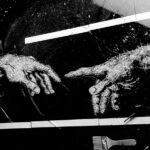
How Broken Glass Art Is Made: The Process Behind Every Crack
Discover how broken glass art is created through controlled fractures, laminated glass, light and precision — the process behind realistic broken glass portraits by artist Yasin Uca.
Introduction — What Is Broken Glass Art?
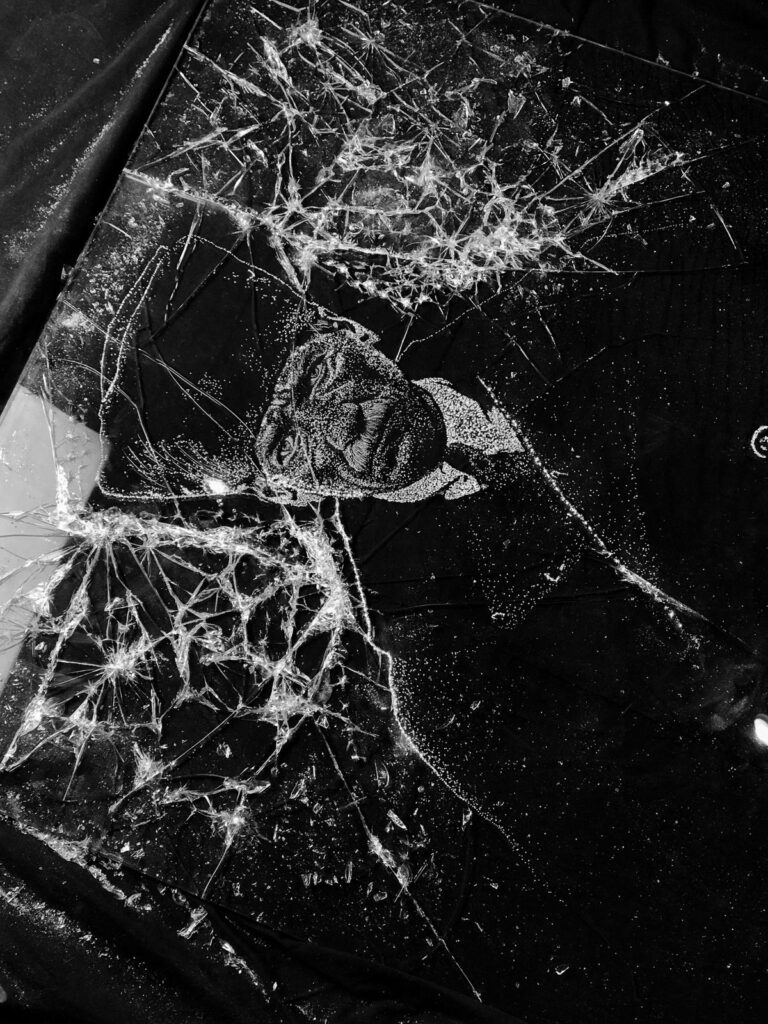
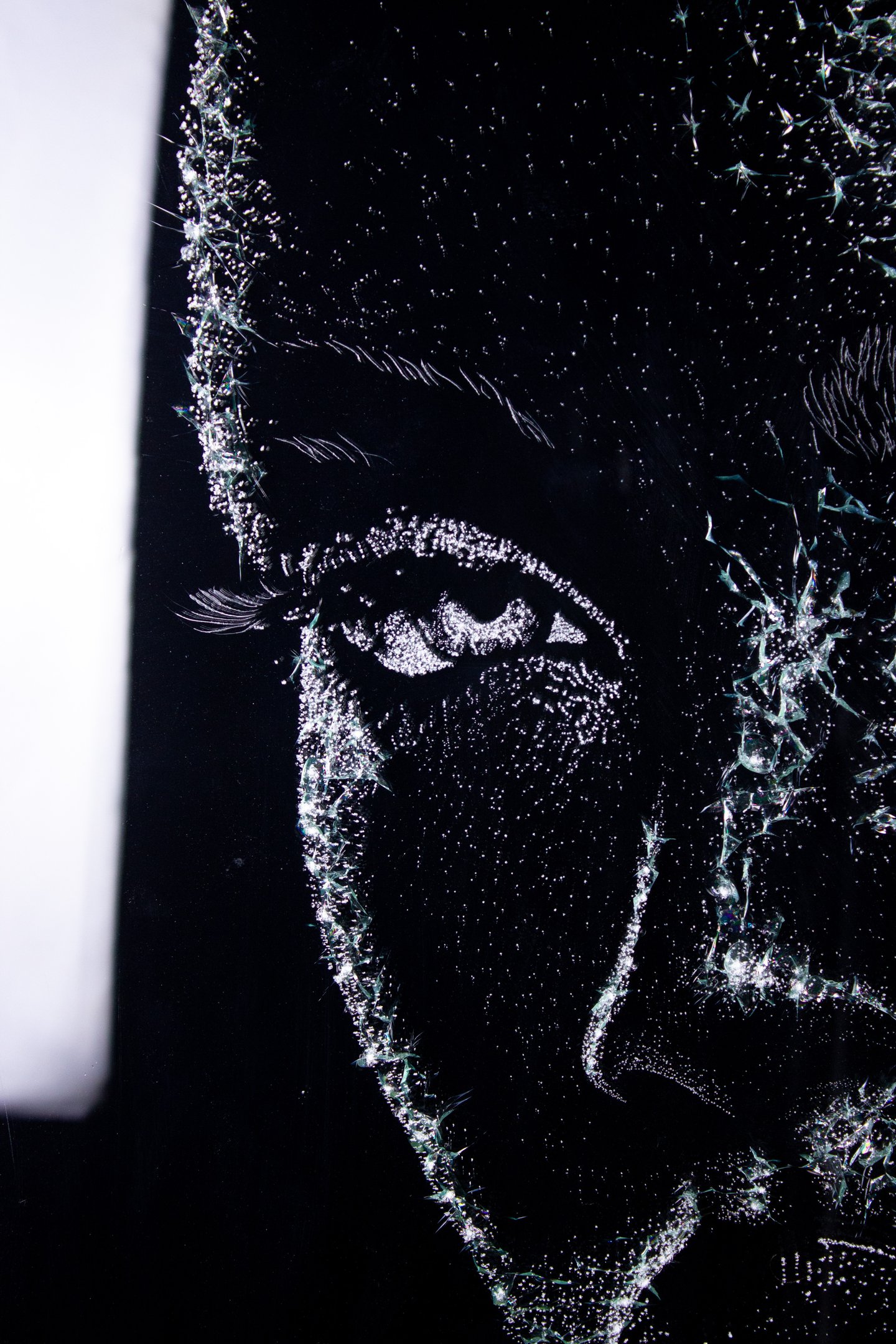
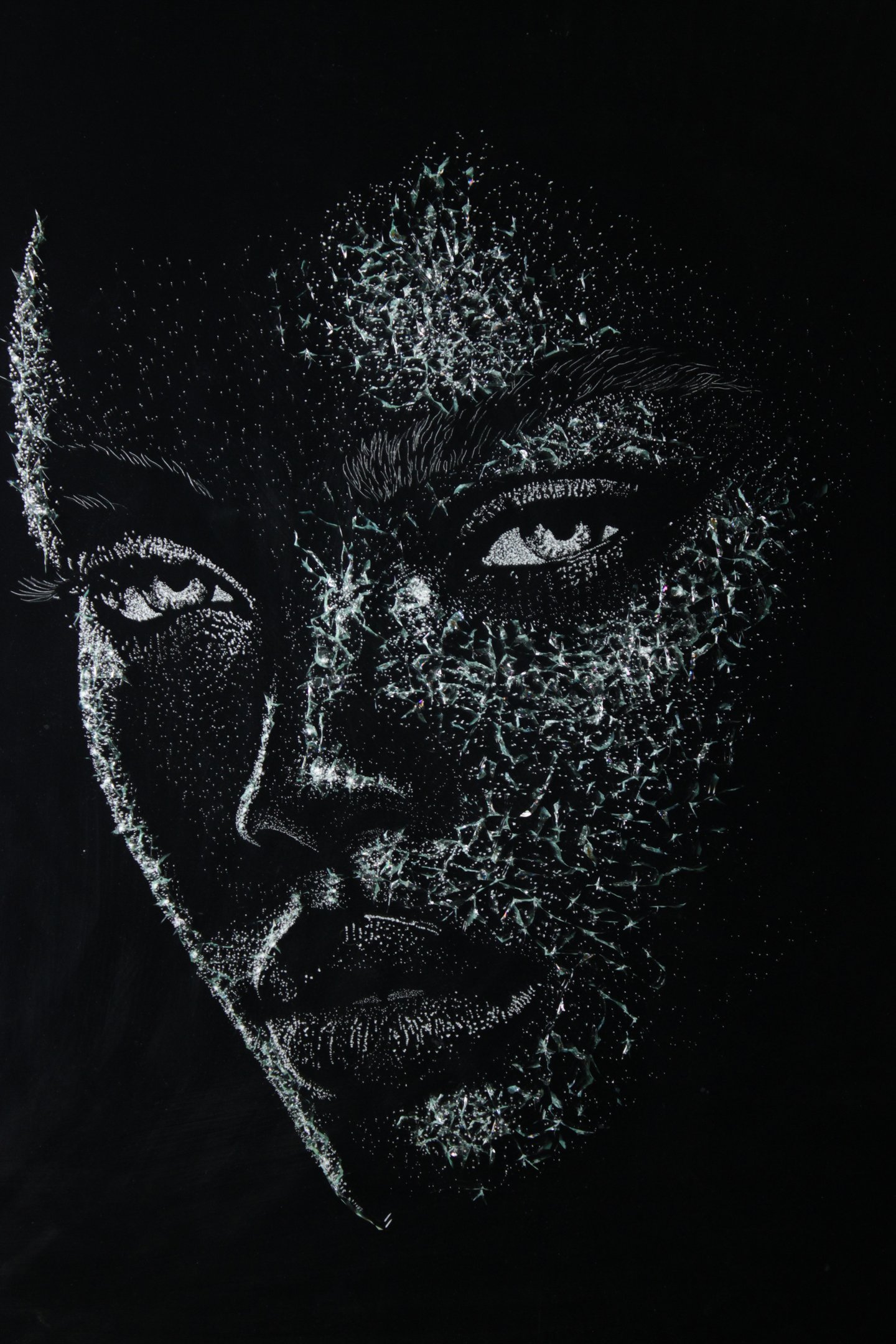
Broken glass art is a modern glass art technique where controlled fractures are used to create visual compositions on laminated glass surfaces. At first glance, the process may appear completely chaotic, but in reality every strike is carefully calculated to create a specific direction, density and contrast. When viewed from a distance, hundreds or even thousands of fractures merge together to form a realistic image.
To me, the most fascinating aspect of this art form is the transformation of a fragile material into an emotional surface. Glass is usually perceived as cold, rigid and destined to break. Yet when approached with the right technique, it becomes capable of reflecting light, depth and emotion in extraordinary ways.
Unlike painting, no paint draws the image; the back is painted black only to give the fractures depth. The image is created entirely through the behaviour of light inside the fractures. This is why the artwork can feel completely different depending on the viewing angle and lighting conditions.
The Type of Glass Used
The glass used in broken glass art is very different from ordinary window glass. In my works, I mainly use laminated glass because it allows the material to maintain its structural integrity even after controlled cracking.
Laminated glass consists of two layers of glass bonded together with a safety interlayer. When fractures appear, the glass does not completely collapse because this interlayer holds everything together. This structure not only improves safety but also allows the crack patterns to be controlled with remarkable precision.
In some artworks, tempered glass is also used. Especially in large-scale pieces, different glass combinations may be preferred to increase durability. Tempered glass behaves differently from standard glass and is significantly stronger, but its fracture characteristics make it unsuitable for certain controlled effects.
Broken Glass Art and Stained Glass
Broken glass art is sometimes confused with stained glass because both are forms of light-based glass art. Technically, however, they are entirely different.
Traditional stained glass is created by assembling coloured glass pieces together. Broken glass art, on the other hand, creates imagery through controlled fracture density inside laminated glass. The image is formed not by separate pieces, but by the interaction between light and cracks.
Still, both art forms are deeply connected to light. As daylight changes, the emotional atmosphere of the artwork changes as well.
Controlling the Fractures
One of the questions I hear most often is: “How do you crack the glass without completely destroying it?” That is actually the hardest part of the process.
Every hammer strike creates a chain reaction inside the glass. A strike that is too strong may cause fractures to spread into unwanted areas, while a strike that is too weak may fail to create enough contrast.
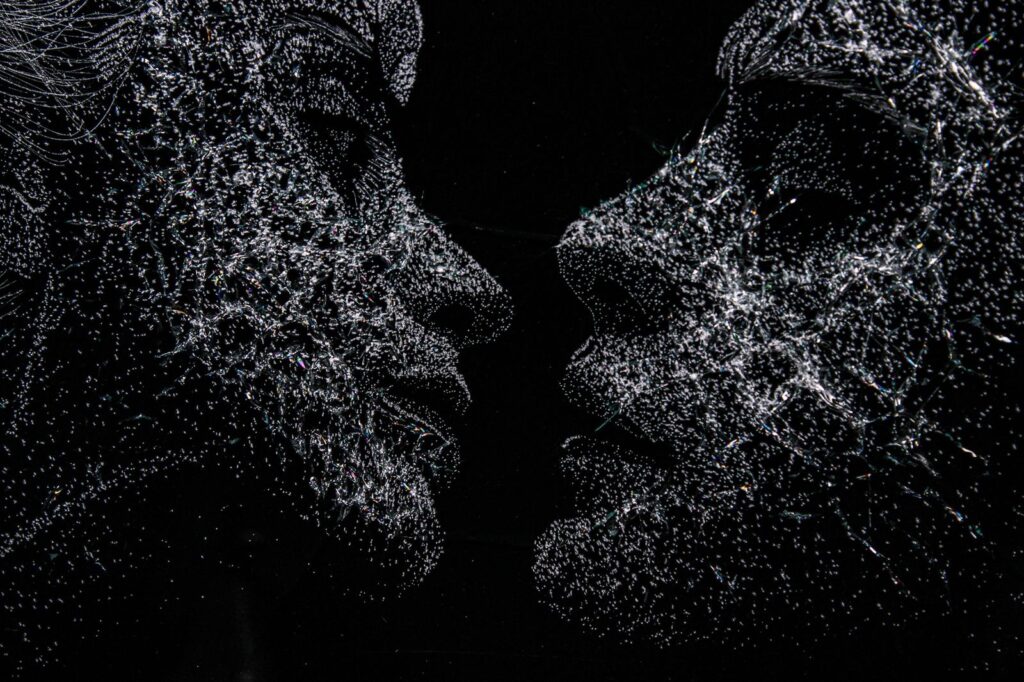
I think of each strike almost like a pixel. Areas with dense fracture patterns appear brighter, while untouched regions remain darker. This contrast system is what slowly builds the portrait.
In some areas, hundreds of tiny interventions are required. In others, a single mistake can destroy hours of work. Especially around the eyes and facial anatomy, the margin for error becomes extremely small.
How Do Fractures Create an Image?
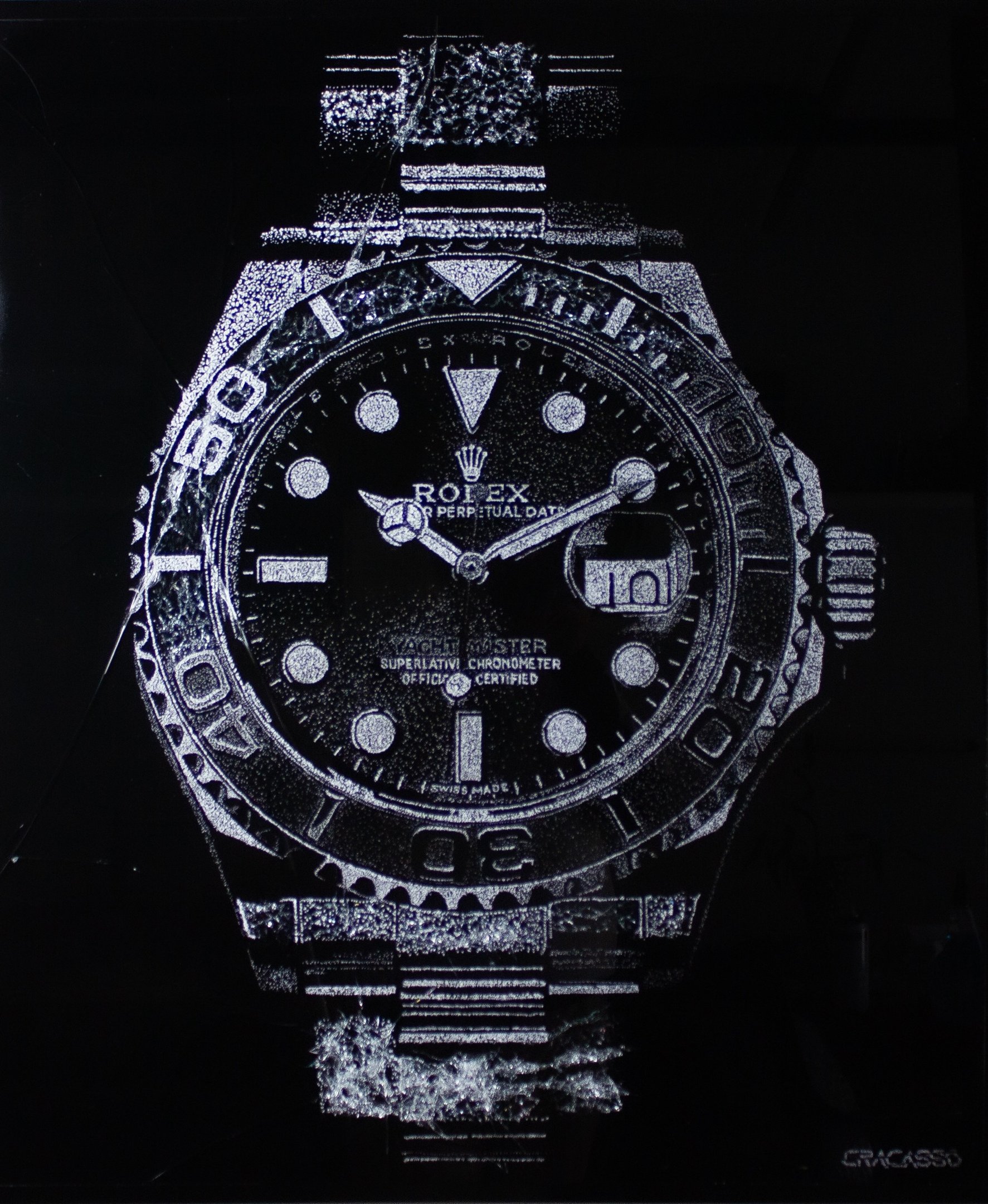
The most fascinating aspect of broken glass art is that the image is not formed through drawn lines, but through light refraction.
Cracks appear white because they scatter light in different directions. When combined with a dark background, these white fractures create strong visual contrast. The human eye eventually interprets these density differences as an image.
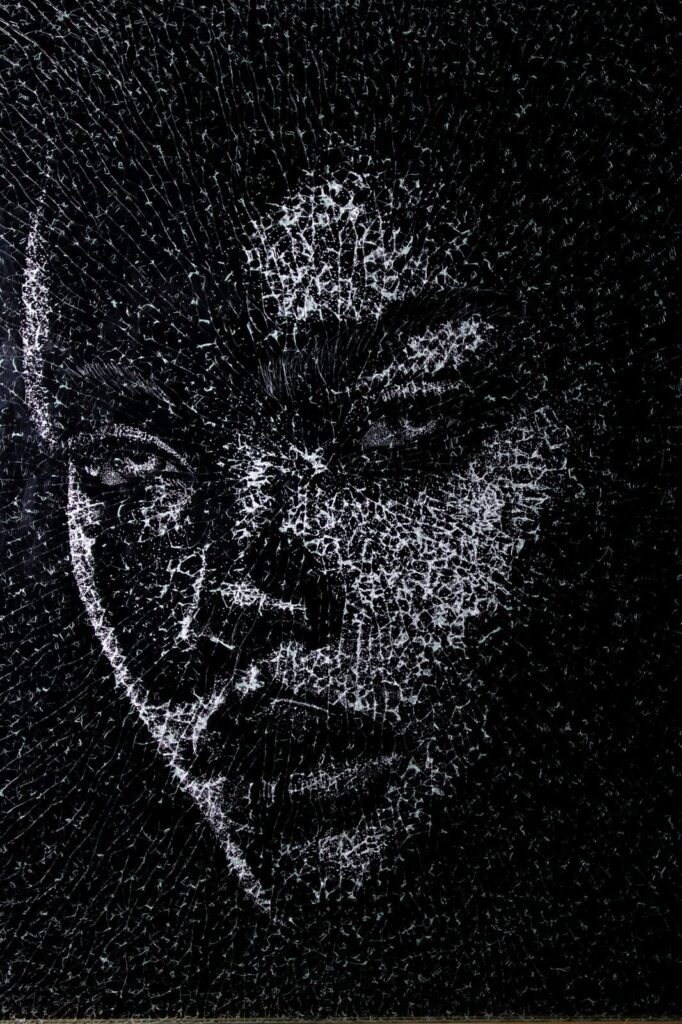
Up close, the artwork may appear chaotic. But from a distance, the fractures visually merge together and the portrait becomes clearer. In many ways, this resembles the logic of digital pixels or old monochrome print techniques.
Creating a Portrait
Every artwork begins with selecting the right reference photograph. High-contrast images work especially well for this technique.
The first step is planning the major facial structures — the eyes, nose, mouth and light-sensitive regions. Then I begin building tonal density.
The goal is not simply to reproduce a face, but to create emotion. Broken glass art is as psychological as it is technical. Realistic details such as skin transitions, hair texture and facial shadows are created entirely through fracture distribution.
Why Every Artwork Is Unique
In broken glass art, reproducing the exact same artwork twice is completely impossible.
Every fracture develops its own natural direction. Even if the same force is applied to the same area, microscopic tensions inside the glass will always produce different results.
This is one of my favourite aspects of the process. Even when the artist controls the composition, the glass still leaves traces of its own character. Broken glass art exists somewhere between control and chaos.
The Role of Light
In this art form, light is not just an accessory — it is an active part of the artwork.
An artwork that appears soft under morning light may become dramatically contrasted in the evening. Some fractures disappear from certain angles while becoming extremely bright from others.
Artificial lighting can also completely change the perception of the piece. Side lighting often enhances depth, while top lighting can create stronger dramatic contrast. This is why broken glass artworks feel much more alive in person than in photographs.
The Challenges Behind the Process
From the outside, broken glass art may seem like simply “breaking glass”. In reality, it is an extremely delicate process.
Large-scale artworks become especially difficult because controlling pressure across wide surfaces is much harder. One uncontrolled fracture can ruin the entire composition.
Another major challenge is international shipping. Since glass is naturally fragile, artworks require specially engineered wooden crates, protective foam systems and shock-absorbing structures.
How Durable Is Broken Glass Art?
Contrary to what many people assume, laminated glass is highly durable.
Because the interlayer holds every fracture in place, the artwork does not fall apart. With proper framing and packaging, these artworks can be safely displayed for many years. Temperature and humidity changes generally do not pose major problems under normal conditions. Read more in Is broken glass art safe and durable?
Conclusion — Turning Fragility Into Art
To me, broken glass art is not simply a technical process. It is the transformation of controlled chaos into an emotional form.
Every fracture leaves a trace. Every strike builds a small part of the image.
Perhaps this is why broken glass art creates such a strong emotional response. Watching a fragile material transform into something visually powerful feels completely outside ordinary artistic expectations.
Glass is naturally meant to break. What I do is transform that fragility into a story. See the works available now or commission your own portrait.