




The Philosophy Behind the Mythology Series: Medusa in Shattered Glass
Explore the profound philosophy of Yasin Uca’s Mythology Series. Discover the intersection of Medusa shattered glass art and ancient icons—a one-of-one masterpiece of intentional chaos and luxury glass sculpture.
Yasin UCA
2/22/20266 min read
The Philosophy Behind the Mythology Series: Medusa in Shattered Glass
The intersection of classical storytelling and modern material science creates a unique void in the contemporary art world—a void that Yasin Uca fills with his signature technique. The Mythology Series is not merely a collection of historical figures; it is a profound exploration of how ancient archetypes can be reconstructed through the medium of fragility and impact. By choosing Medusa as a flagship piece for this series, the artist invites the viewer to look beyond the literal "shattered" surface and engage with the deeper layers of resilience and transformation.
In this one-of-one original work, the chaos of broken glass is not an accident; it is a masterfully crafted "intentional chaos" that redefines the visual language of shattered glass portraits. As the art market shifts towards more tactile and conceptually heavy pieces, the Mythology Series stands at the forefront of this evolution, merging the timelessness of Greek myths with the radical unpredictability of glass as a medium.
The Myth of Medusa: A Tale of Transformation and Fragility
"To understand the Medusa piece in the Mythology Series, one must first look at the duality of her myth. Often portrayed as a monster to be feared, the deeper philosophical reading of Medusa is one of a woman transformed by external forces, carrying a gaze that can freeze time itself—a concept that Yasin Uca masterfully translates into the frozen, jagged lines of shattered glass. In this artistic interpretation, the 'shatter' represents the pivotal moment of her transformation; it is the physical manifestation of a narrative that has been broken and rebuilt. By utilizing the portrait broken glass technique, the artist avoids the static nature of traditional sculpture, instead offering a dynamic surface where every crack reflects Medusa’s multifaceted identity—as both a victim of Olympian tragedy and a symbol of indestructible power. For the viewer, the gaze of this broken glass artwork does not turn the observer to stone, but rather invites them to pause and reflect on the beauty found within the most complex of destructions
Beyond the Gaze: Reinterpreting Medusa’s Story in Modern Art
In this shattered glass artwork, Yasin Uca captures the exact moment between the gaze and the petrification. Unlike traditional marble sculptures that aim for a smooth, eternal finish, the use of broken glass reflects the inherent fragility of Medusa’s own narrative. Each crack in the glass acts as a frozen lightning bolt, symbolizing the trauma and the power that coexist within her character. This reinterpretation moves away from the "monster" and towards the "icon," making it a pivotal piece for collectors of luxury glass sculptures. The fragmented nature of the material mirrors the fragmented identity of a figure who was both a victim and a victor in her own story.
The Symbol of Power and Protection in Ancient Greece
Historically, the Gorgoneion (the head of Medusa) was used as an apotropaic amulet to ward off evil. By bringing this symbol into the modern era through broken glass portrait techniques, the artwork serves a dual purpose: it is a striking aesthetic statement and a modern-day talisman. The sharpness of the glass shards mirrors the protective, fierce nature of the myth, while the overall composition remains balanced and hyper-realistic.
The Masterfully Crafted Technique: How Shattered Glass Defines the Series
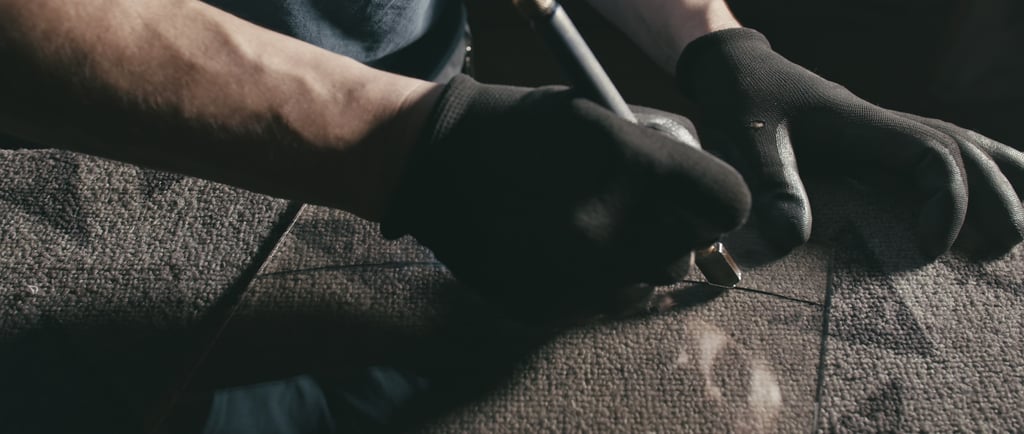
The creation of shattered glass sculptures requires a level of precision that fundamentally contradicts the violent and unpredictable nature of the material itself. Yasin Uca’s approach to the Mythology Series involves a meticulous, almost surgical process where every single impact is calculated to serve the final portrait, ensuring that the 'shatter' follows a predefined aesthetic logic. This is where the artist's concept of 'intentional chaos' truly manifests; it is not about the destruction of the glass, but about the masterful guidance of energy through the medium. Each strike is a high-stakes decision that defines a contour or a shadow, transforming a volatile act into a sophisticated broken glass portrait. For the observer, this technical rigor elevates the work from a mere visual experiment to a feat of discipline, where the inherent danger of the shards is tamed to capture the delicate features of mythological icons like Medusa.
The Physics of Impact: Creating Intentional Chaos
"Intentional chaos" is the term that best defines the creation of the Medusa piece. Instead of random destruction, the artist guides the cracks to form the intricate details of the snakes and the haunting expression in Medusa’s eyes. This technique ensures that each work is a one-of-one original, as no two pieces of glass will ever shatter in the exact same pattern. For the collector, this means owning a moment of physics and art that can never be replicated. It is a controlled explosion of creativity, frozen in time.
Light and Shadow: The Role of Transparency in Glass Sculptures
One of the most complex aspects of broken glass artwork is managing how light interacts with the fractured surfaces. In the Medusa portrait, light is not just reflected; it is refracted through thousands of tiny edges, creating a sense of movement within the static sculpture. This interplay of light and shadow adds a 3D depth to the 2D plane, a hallmark of Yasin Uca’s work that has recently garnered significant attention from the European art market, particularly in Italy and Germany.
A Journey Through the Mythology Series by Yasin Uca
The Mythology Series is part of a larger artistic vision that seeks to bridge the gap between ancient history and contemporary luxury, positioning shattered glass art as a new medium for cultural storytelling. While Medusa serves as a cornerstone of this collection, the series explores various archetypes that resonate deeply with the modern human condition—the struggle for power, the fragility of beauty, and the inevitability of transformation. By expanding this vision beyond classical figures to modern icons such as Atatürk or high-status symbols like the Rolex watches, the artist creates a dialogue between the timeless and the temporal. Each piece in this broader portfolio acts as a mirror to the viewer’s own journey, using the unique physics of broken glass portraits to reflect how modern identity is often formed through a series of impactful, 'shattering' moments. This expansion proves that the technique is not bound by a single subject, but is a versatile language capable of elevating any subject into a one-of-one masterpiece for the discerning global collector.
Why Shattered Glass? The Choice of Material in Mythological Context
Glass is a material of contradictions: it is strong enough to shield but fragile enough to shatter in a second. This mirrors the mythological gods and heroes who were immortal yet plagued by human-like flaws. By using portrait broken glass techniques, Uca emphasizes that our heroes—like our art—are beautiful because of their imperfections and the way they handle "impact".
From Medusa to the Gods: What’s Next in the Collection?
As the series evolves, it moves beyond individual portraits to explore monumental themes of power and time. The recent focus on icons like Atatürk or luxury symbols like Rolex watches shows the versatility of the shattered glass medium in capturing both historical weight and modern desire. The upcoming additions to the Mythology Series will continue to push the boundaries of what is possible with broken glass sculpture.
Shattered Glass Art as a Statement Piece in Luxury Interior Design
For the modern collector, art has transcended its traditional role as mere decoration; it is now viewed as a strategic investment in a narrative that challenges the status quo. In this context, shattered glass sculptures by Yasin Uca have emerged as highly sought-after statement pieces within high-end European residences, from the minimalist villas of Berlin to the historic estates of Milan. The appeal lies in the duality of the work—it is at once a display of aggressive physical impact and a testament to meticulous, hyper-realistic control. As these collectors move away from mass-produced luxury, they find value in the 'intentional chaos' of Uca’s technique, recognizing that each fracture is a non-reproducible event in time. Consequently, owning a piece from the Mythology Series or a custom broken glass portrait is not just about aesthetic prestige; it is about securing a one-of-one fragment of contemporary art history that gains emotional and financial weight as the artist's international footprint continues to expand
The Investment Value of One-of-One Original Artworks
In an era of mass production, the "one-of-one" status of these pieces provides significant long-term value. Collectors are increasingly looking for original broken glass artwork that cannot be duplicated by AI or machines. Each Medusa or Portrait piece carries the physical signature of the artist’s hand and the unique physics of the moment it was created.
Integrating Large-Scale Glass Sculptures into Modern Living Spaces
Interior designers are utilizing these pieces to add texture and a "wow factor" to minimalist spaces. A broken glass sculpture acts as a focal point that changes throughout the day as the sun moves, offering a dynamic visual experience that traditional paintings cannot match.
Conclusion: The Enduring Legacy of Shattered Glass Portraits
Yasin Uca’s Medusa is more than just a portrait; it is a testament to the power of transformation. It proves that beauty can be found in the broken, and that chaos, when guided by a master's hand, can result in a masterpiece of order and elegance. As the Mythology Series continues to gain international acclaim, it redefines our understanding of both ancient myths and modern materials, leaving an indelible mark on the world of original broken glass artwork.
CRACASSO L.L.C
Showcasing and selling original artworks with elegance.
Portfolio
Contact
info@cracasso.com
+1(234)291-0333
© 2026. All rights reserved.