How Cracks Form in Glass: A Visual Reference for Fracture Patterns
Impact point, radial and concentric cracks, and why laminated glass stays whole: a visual reference for cracked glass, from the studio.
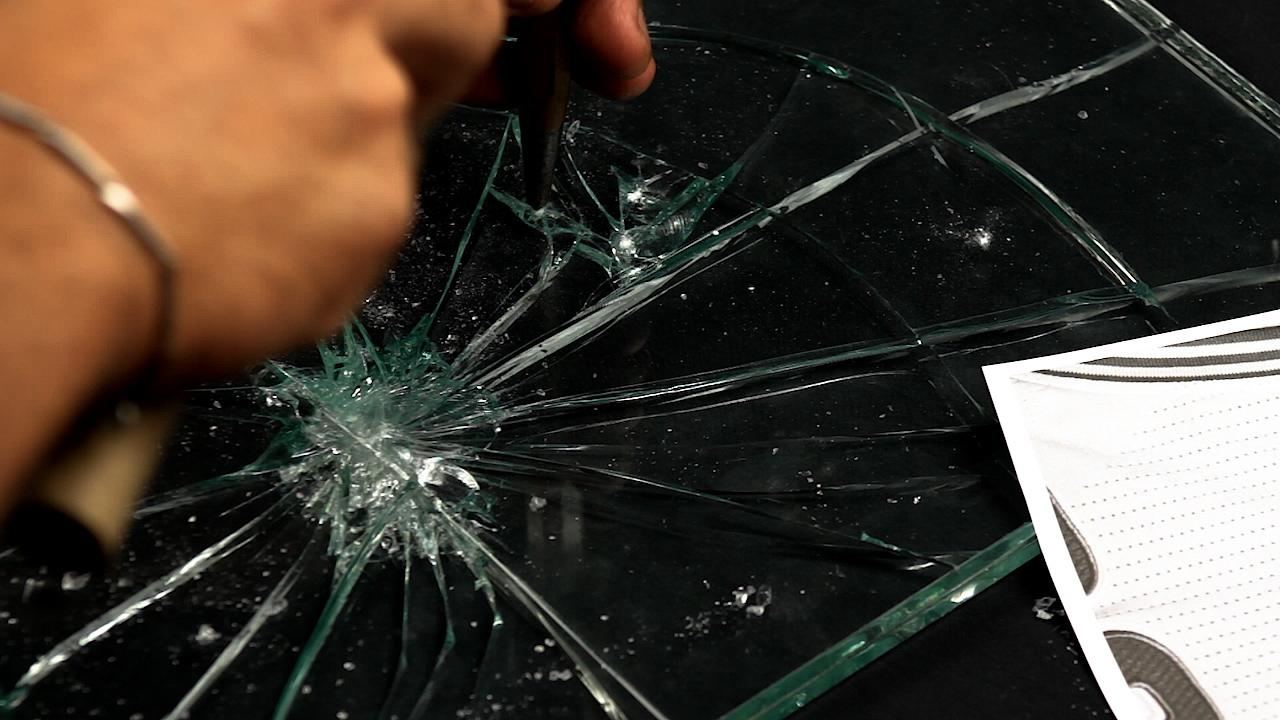
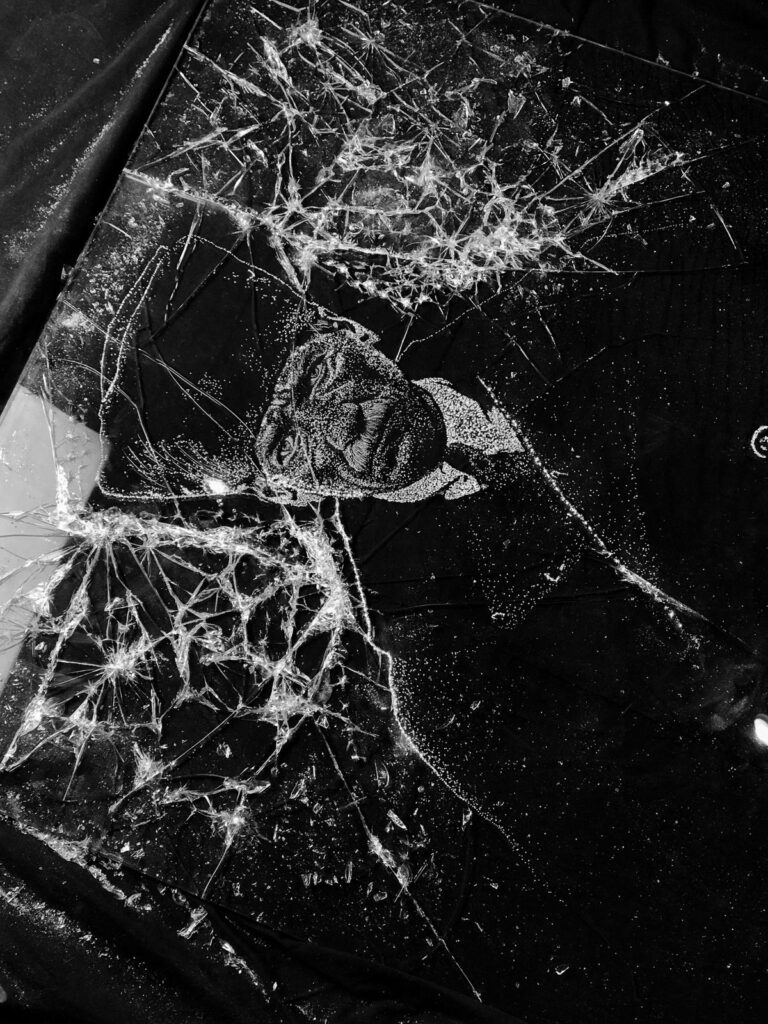
Artists, designers and curious viewers often search for a “cracked glass reference”: what does a crack really look like, and why does glass break the way it does? Working with fractures every day, the Cracasso studio has learned to read them. This visual guide explains the main fracture patterns — and how they become an image.
The impact point
Every fracture pattern starts at a single point where energy enters the glass. Directly under a sharp impact, the glass often turns white and granular — a small, dense starburst. This is the brightest spot in any crack, because it has the most edges to catch light.
Radial cracks
From the impact point, straight cracks run outward like the spokes of a wheel. These are radial cracks. Their number and length depend on how hard and how sharply the glass is struck: a light tap may produce three or four short lines, a strong strike a dozen long ones.
Concentric cracks
Around the impact point, curved cracks often connect the radial lines, forming rings. These concentric cracks are what give a strike its classic “spider web” look. Together, radial and concentric cracks divide the glass into small wedge-shaped cells.
Why laminated glass behaves differently
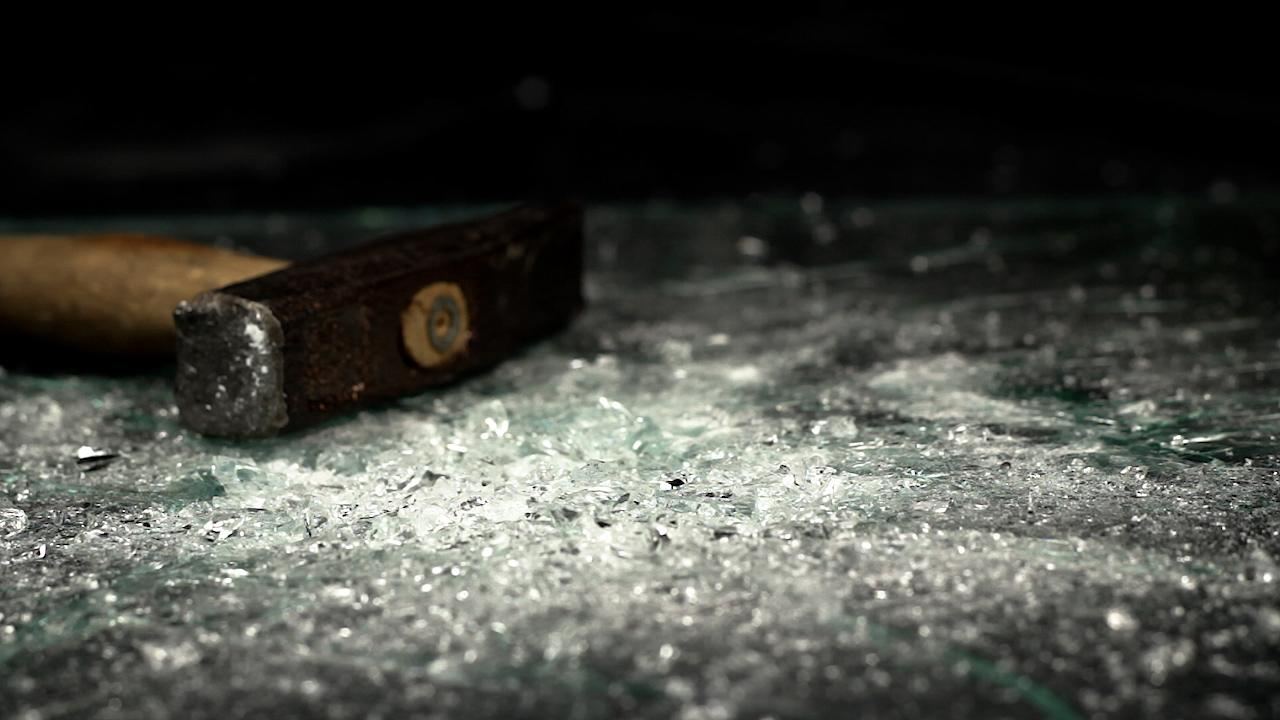
Ordinary window glass shatters and falls apart. Laminated safety glass — two layers bonded to a flexible interlayer — cracks but stays in one piece, because the interlayer holds every fragment in place. That is what makes broken glass portraits possible: hundreds of strikes can be added to the same pane without it collapsing. Tempered glass behaves differently again: it is much stronger, but when it fails it breaks into many small, blunt pieces at once. Depending on the work, the studio uses laminated glass with plain or tempered layers, choosing the combination that gives the right fracture character.
From cracks to an image
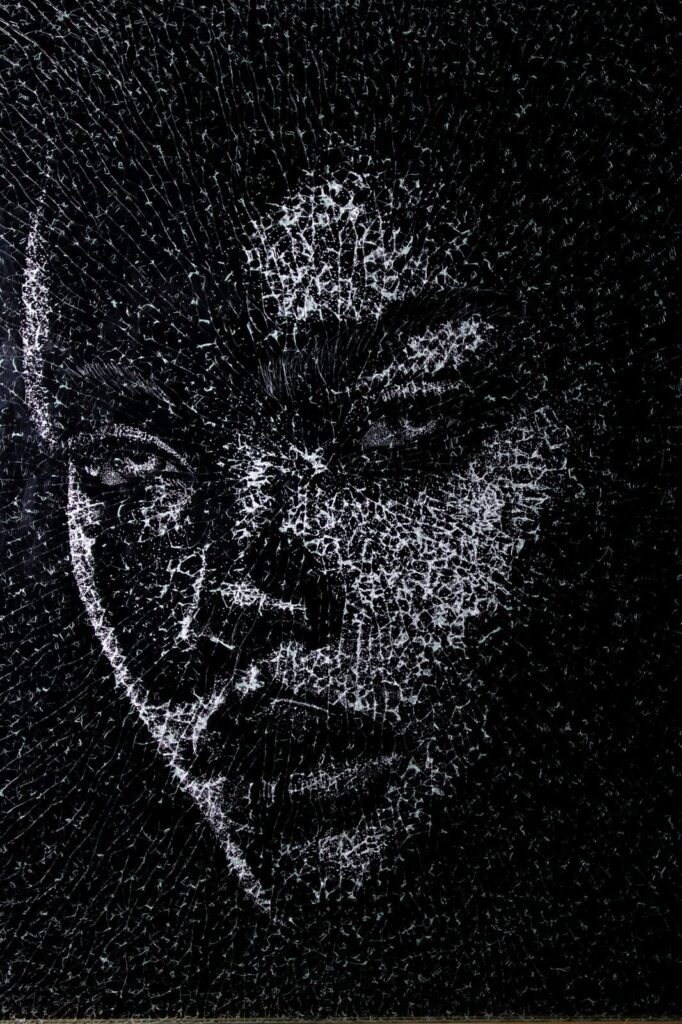
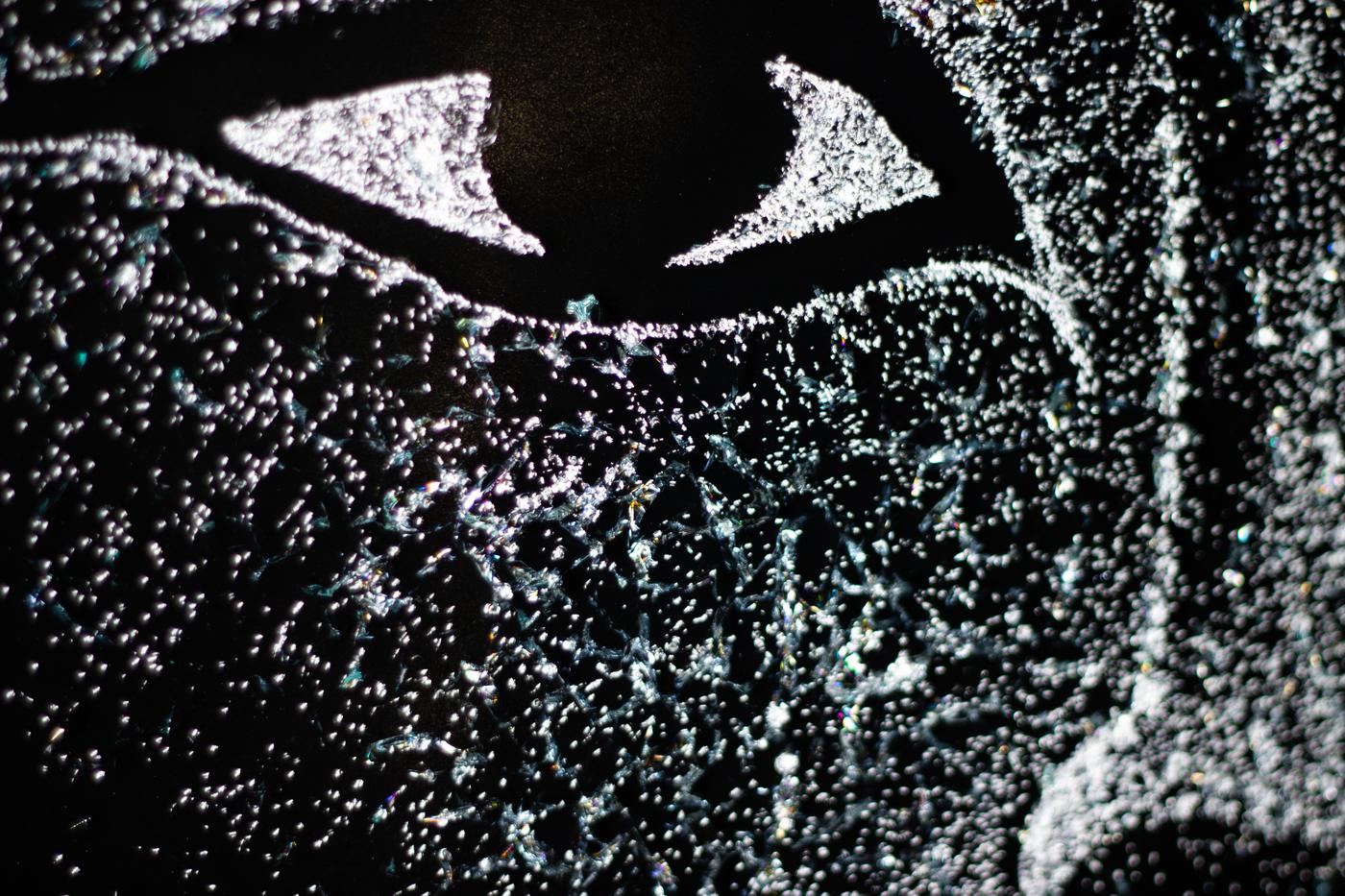
A single strike is a pattern. Hundreds of strikes become a drawing. The artist controls where each strike falls, how much force it carries and how close it is to the last one. Dense clusters of impacts read as bright highlights — the light on a cheekbone or in an eye. Areas left untouched stay black and become shadow. Long radial lines can follow the direction of hair or the edge of a jaw.
Using this as a reference
If you are drawing or painting cracked glass, look for three things: the bright, granular impact point; the straight radial lines; and the curved concentric links between them. Cracks never cross each other freely — a new crack usually stops when it meets an existing one. That small detail is what makes a painted crack look real.
To see how these patterns become portraits, read How broken glass art is made or look closely at the details of Lovers and Medusa Gaze.