

SOMEONE WAS HERE
An Existential Manifesto
You may wish to read this text accompanied by the Seikilos melody, which has come down to us from nearly two thousand years ago.
Recording: sung by Marcus Harvey · Wikimedia Commons · CC BY-SA 2.5
The sole reason I chose this art was never to make money, become famous, or prove myself to society by claiming some kind of intellectual superiority. It never will be.
I have never fully understood the importance human beings assign to themselves. In a universe billions of years old, on a tiny planet, I cannot accept that a creature whose existence is less significant than a speck of dust on a cosmic scale should think so highly of itself. We build empires, draw borders, hand out titles, exalt or belittle one another, as though the universe cared about any of it. Yet we are, in Carl Sagan's words, merely thinking animals living on a pale blue dot.
We will be born, we will live, and we will die. And then what? Will we really have lived?
What does it mean to live? To breathe? To love, to suffer, to think, to create? Or to occupy a place in someone else's memory? There is a familiar saying: When the last person who remembers you dies, it will be as though you never lived. It sounds like a cliché. But the longer I think about it, the more unsettling it becomes. When every trace that proves a person once lived has disappeared, what remains?
Of course, a life does not become unlived simply because it is no longer remembered. Nor does the universe's indifference erase the value a life can have in itself. But that is not quite what troubles me. When the last conscious being who knows we once existed is gone, what will remain of our existence? Perhaps what I fear is not death so much as being erased as though I had never been here. I don't know.
The only thing I know is that time grants none of us special treatment. Life is one day, and that day is today. We do not know what tomorrow will bring to anyone. The future has not yet been lived. The past survives only in memories, and memories are as mortal as the minds that carry them.
Today we can fit entire lives into digital storage. Our photographs, our voices, our thoughts, the traces of the relationships we have had with those we love—all can be kept behind a screen, on a server, or in the memory of a device small enough to hold in one hand. I recognise what an extraordinary technological achievement that is. But the thought that all that remains of a human life might be a forgotten file, an inaccessible account, or a flash drive that will one day stop working unsettles me.
Perhaps this fear is particular to our age. Perhaps people in the past carried the same anxiety and responded in their own ways: carving a name into stone, marking the trunk of a tree, making a grave, telling a story. Behind all of them may lie the same quiet protest: I was here.
That thought lies at the heart of my relationship with art. I want to give a form that might outlive me to the arguments I have with myself, the questions I cannot answer, and my thoughts about my own existence. I want to leave an inscription behind. A trace that might tell people who will never know me—perhaps a generation not yet born—that someone once lived here who thought, questioned, and felt.
But the desire to express ourselves does not arise only from a wish to be remembered. Sometimes words are not enough for what we carry within us. Perhaps that is where art begins.
What is art?
Is it knowing a painter's brushstrokes by heart? Memorising the palette they used, explaining when their works were made or which artistic movement they belonged to? Knowing the lives of painters, sculptors, musicians, actors, and thinkers may help us understand more about their work. But does knowing all this mean we truly feel art?
Imagine two people standing before a painting. One knows the painter's life, the techniques involved, the rules of composition, and the work's historical context. The other has never even heard the painter's name. Yet it is the second person whose eyes fill with tears, who finds themselves confronted with a memory they thought they had forgotten years ago. Which of them truly understands the art? Perhaps both. Perhaps neither. Because I do not believe that there is one correct answer to what a work of art must mean.
Knowing how a work was made explains how it came into being. It does not always explain why it stirs a feeling in someone that they cannot put into words. For me, art is an attempt to give form to the thoughts and emotions we carry within us but cannot adequately express in language. Sometimes we do not even know what we feel. Something is there. We feel its weight, but cannot name it. When we try to explain it, words fall short; sentences fail to hold precisely what we mean.
Perhaps that is why human beings seek other forms of expression. We make a sound. Draw a line. Shape a stone. Move our bodies. Tell a story. Art is another language human beings open up for themselves when words are no longer enough.
This language has no dictionary of fixed rules. We can be moved by a work without knowing what its creator intended to say. We may even feel something entirely different from what the artist meant. I do not think that should necessarily mean we have misunderstood the work. Art does not live only in the mind of its maker. It takes shape again within the person who looks at it, listens to it, or experiences it.
A melody that reminds one person of childhood may evoke in another the sorrow of a loss they never experienced. A painting that leaves one person unmoved may occupy someone else's thoughts for hours. What the artist leaves behind is the same; the minds that receive it are not.
Can such a language be taught? Technique can be taught. Perspective, anatomy, colour theory, harmony, and composition can be learned. A person may devote an entire life to mastering them. I do not deny their value. But I do not believe any school can teach a person what they ought to feel.
There is no examination that can measure why we fall silent before a work, why we cry, or why a single line sometimes affects us more deeply than a long conversation. There is no litmus test that decides who is an artist and who is nothing. Diplomas, prizes, titles, and exhibitions can show what someone has achieved. They cannot definitively measure the depth of that person's inner world or what their work might awaken in another mind. I believe that is also where we should look for art's value: not only in how skilfully it is made, but in what it can set in motion within us.
And this thought is not new. It is as old as the human story. Before the alphabets we use today existed, people already had fears, joys, losses, and thoughts they could not make sense of. One day, a human being picked up a piece of charcoal and drew an animal on a cave wall. Perhaps they wanted to record what they had seen. Perhaps it was part of a ritual. Perhaps they simply felt the need to draw. We cannot know for certain. But thousands of years later, looking at that drawing, we encounter the trace left by another human being. We do not know their name, face, voice, whom they loved, or what they feared. Yet we know that they were once there.
Ever since, human beings have used whatever they could find to express themselves. They drew with charcoal on cave walls, shaped stone, laid colour onto canvas, entrusted their feelings to musical notes. Sometimes they made a small sketch in the margin of a notebook that no one else would ever see. Sometimes they sat by the sea and drew something in the sand with a finger, knowing the next wave would wash it away.
And here I encounter another question that troubles me: Why do human beings create something they know will disappear?
A drawing in the sand is certain to vanish in a few minutes. No one may see it. No one may remember it. Perhaps no evidence that it ever existed will remain. Yet someone still bends down and draws that line. Why? Perhaps permanence is not the whole purpose of art. Perhaps people sometimes create not to be remembered, but simply because they need to bring something within them out into the world.
When the wave erases the drawing, something may already have changed inside the person who made it. Perhaps they gave shape to a thought, eased a pain, or explained to themselves for the first time what they were feeling.
That thought challenges my own purpose. I want my work to outlive me. Yet the person drawing in the sand may have no such expectation. Still, we may be responding to the same need: the need to make room in the outside world for something we carry within us.
Perhaps permanence is not an essential purpose of art, but sometimes a desire we place upon it. It is my desire. And I am aware of that.
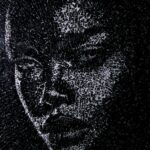
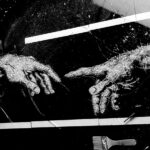
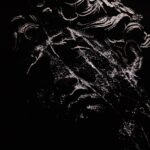
I work with glass, because glass is a strange material that resembles us. It is hard but fragile. Transparent, yet sometimes it conceals what lies behind it. It transmits, reflects, divides, and distorts light. A single blow can split it into hundreds of fragments. I deliberately fracture this fragile material and try to form a new whole from the cracks that emerge.
I do not see breaking only as destruction. Sometimes breaking something can reveal what was previously invisible within it. But I do not believe everything broken becomes more beautiful. I do not glorify breakage itself. Breaking glass is a technique, a tool. Why and how I use it are part of what I am trying to say.
I cannot control every crack. The material has a nature of its own. Sometimes it follows the direction I intend; sometimes it finds its own path. The result is born of the relationship between my intention and the limits of the material.
Perhaps human life is not so different. We imagine we have planned everything. We try to determine our futures and organise our lives. Then one event can overturn all our calculations. For all our efforts, we cannot know when, where, or how life will fracture.
But I am not trying to express only my own fragility through my work. I think what matters most when someone looks at a piece is not so much what I put into it as what they find of themselves within it.
Someone may see their own memories in an area I deliberately left empty. A crack I made may awaken a memory they have spent years trying to forget. A detail that has no particular personal meaning for me may become the most important part of the work for them.
That is why I do not believe the artist should determine a work's entire meaning alone. I can fracture glass. I can change the direction of cracks, calculate how light will scatter, and work for hours or days to bring forth an image. But I cannot decide what the person standing before it will feel. Nor do I want to.
For me, art is not telling people what they should think. It is leaving them room to encounter something within themselves.
Perhaps someone looking at my work will find none of my own thoughts there. Perhaps they will discover a meaning I could never have imagined. I accept that. The idea of a work beginning to live independently of its maker excites me. I want the relationship people form with my work to continue after I die.
Even when I have nothing left to say, the people who look at it may continue asking questions of their own. I do not know whether that will happen. But I am trying to make something that might outlive me from a material I know can break. Perhaps that is, in its simplest form, my entire relationship with art.
The writings of Armand D'Angour on The Song of Seikilos played an important part in shaping these thoughts.
Roughly two thousand years ago, in the lands we now call Aydın, someone inscribed a song on a marble column. Not only its words, but its melody. His name was Seikilos. Today we know the inscription as one of the oldest surviving complete examples of notated music from antiquity. Yet what moves me most is not how old the music is. It is that we can still hear it today.
The song Seikilos left behind spoke of life's brevity and of time eventually claiming its due from us all. How strange. Two thousand years ago someone thought about how short life is and carved that thought into stone. Then his own life ended. But his song continued to live.
And that stone was not always treated as a work of art. Centuries later it passed into the hands of people who did not recognise the significance of the words and notes upon it. For a time it served as a base for flowerpots. Part of its lower section was cut away to make it stand flat, and some of the inscription was lost.
I find myself imagining it. Perhaps thousands of people walked past that stone. Perhaps they sat on it or leaned against it. Perhaps a few cats or dogs even urinated on it. The stone carrying a song that could still be heard two thousand years later was simply an ordinary object in other people's daily lives. But that did not diminish the thought it carried. The fact that a work is in the hands of people who do not recognise its value does not make it worthless.
Today we can listen to Seikilos's song, to a melody born in the mind of someone who lived around two thousand years ago, whose face we have never seen and whose voice we have never heard. The thought gives me chills.
For what has not happened in those two thousand years? Empires collapsed. Wars were fought. Cities were built, burned, and rebuilt. Rulers who believed themselves invincible died. Today hardly anyone knows the names of many who once believed they ruled the whole world. Yet a few notes carved into stone by one human being can still be heard.
Seikilos did not defeat death. He did not become immortal. Perhaps he never imagined anyone would be listening to his song two thousand years later. But a part of his thought lived far longer than he did.
And there is something that makes this story much more personal for me. Seikilos's inscription was found in Aydın. I live in Aydın today.
Roughly two thousand years ago, he left a trace in these lands. Today I am trying to leave one in the same lands. Perhaps I walk somewhere he once walked. Perhaps I look at the same stars from a place where he once stood watching the sky. I will never know. Nor will I ever know his life as closely as I know my own. But we share a common fate.
Seikilos lived, left a trace, and turned to dust. I am alive, trying to leave a trace, and I too will turn to dust.
Two thousand years separate us. And those two thousand years have changed nothing about the inevitable end of a human life. He died. I will die too. Yet today someone stands before a trace he left, thinks about him, and listens to his song. That someone is me.
A person who lived two thousand years ago is making me question my own existence today. Perhaps that is what I want most: for someone not yet born to encounter one of my works someday.
They may not know who made it. They may never learn whose hands fractured the glass or what thoughts lay behind its cracks. They may not even recognise it as a work of art. Perhaps they will consider it worthless, set it aside, or use it for something else. Just as happened to Seikilos's inscription.
But perhaps someone else will come along one day. They will stand before the glass and, for a moment, wonder what went on in the mind of someone who lived before them. Perhaps they will think only this: Someone was here once.
To me, that would be worth far more than the price the work fetched or the museum in which it was displayed. For one of the most remarkable things art can do is establish a connection of thought between two people who can never know each other.
Seikilos does not know his song is still being heard. Nor will I ever learn what becomes of my work. Perhaps none of it will survive. Perhaps it will all break, disappear, be forgotten. Perhaps nothing of me will remain. But not knowing any of that does not take away my desire to create. On the contrary, perhaps it is because of that uncertainty that I create.
All of this brings me back to what I said at the beginning. I said I could not accept how important human beings think they are. And now I am speaking about wanting to leave something of myself behind, about hoping people might encounter my thoughts hundreds of years after my death.
Is that not a kind of arrogance, too?
Billions of people have been born, lived, and died. Some achieved great things. Some committed terrible acts. Some devoted their lives to those they loved. Some changed the life of a stranger in a corner of the world, someone we will never know. And today we do not know the names of most of them.
So what makes me different? Why should my thoughts deserve to be carried into the future? Why should my existence deserve to be remembered any more than anyone else's?
I have no answer. I do not consider myself more valuable, more important, or more profound than other people. Yet the possibility of being forgotten completely unsettles me. I am aware of the contradiction.
Perhaps the whole tragedy of being human lies here. We are conscious enough to understand that we are not at the centre of the universe, yet attached enough to ourselves that we struggle to accept our own absence.
We know we are mortal. Still we build things meant to last, carve our names into stone, write stories, raise children, and make art—as though these things might help us stand against time a little longer.
Perhaps art, too, is one of the most beautiful excuses human beings have found for their helplessness in the face of oblivion. Perhaps when I fracture glass I am really trying to stand against time. Yet time may eventually break that glass as well.
No material lasts forever. No name has to be remembered forever. And no artist can control the future of their work. I know all this. Still I create.
Because perhaps a person does not need to believe they will live forever in order to make something. Perhaps it is enough to go on creating despite knowing that one day they will disappear. Like the person who draws in the sand knowing the wave will erase it. The difference between us may be simply that I hope my trace will remain a little longer. But both our efforts are made against the same ending. And perhaps, in the end, we will both lose. That possibility does not stop me.
I am not writing this manifesto to gain more customers, find a philosophical justification for the prices of my work, or make myself appear more intellectual than I am. I do not expect to gain anything from it.
Frankly, I am not even sure there is an audience willing to read this far. Perhaps, in this vast digital world made up of ones and zeros, I have simply arranged a heap of words that no one will come across and no one will read to the end. Perhaps these lines will disappear among billions of others. One day this website too may vanish, and what I have written here may be erased as though it had never been written.
Strangely, that possibility reminds me of Seikilos's inscription. His thoughts were carved into stone; mine, for the moment, are nothing more than light on a screen. He left his song on marble. I am leaving my thoughts in a world made of ones and zeros. Perhaps they will not last two thousand years as his did. Perhaps they will not even be here tomorrow.
And still I write. Because not knowing whether anyone will read this does not change my need to write it. Perhaps I am not so different from that person drawing in the sand despite knowing the wave will erase it.
I am only trying to explain myself a little. Perhaps to be understood a little, too.
I do not claim to have discovered some great truth. I am not saying that I have solved the meaning of life, found a definitive definition of art, or come up with an answer to death. I accept that what I say may be wrong. Perhaps years from now I will read these words and disagree with myself.
But that does not matter either. Because this is what I think today. I am alive today. And today, while I still have time, I want to give form to the thoughts within me.
One day I will be gone. The last person who knew me will die too. My name may be forgotten. My face may fade. My voice may disappear. My works may meet the same fate. But perhaps one will remain. Perhaps for a few hundred years. Perhaps for two thousand. Perhaps only until tomorrow.
I don't know.
What I do know is that I can still create something while I am here.
Two thousand years ago, Seikilos left a trace in these lands. Today I am here. I do not know who will be here in two thousand years. But perhaps that person, too, will question their own existence. Perhaps words will fail them too. Perhaps they will stand before a stone, a melody, or a piece of fractured glass and try to understand what someone who lived before them once felt.
And perhaps, in that moment, two people who lived thousands of years apart will meet inside the same question.
I cannot know whether that will happen. I cannot guarantee it. I cannot even claim to deserve it. But I want to try.
Because I do not want to live forever. I already know I cannot. I only want to leave something that says I once lived.
Perhaps all this effort is meaningless. Perhaps what we call meaning is precisely what we try to create within that meaninglessness.
I don't know.
But I am here today. And while I have time, I will keep trying to leave a trace of myself in this world.
— Yasin Uca
CRACASSO