Turkish Art and Broken Glass Art: Where Anatolian Geometry Meets Fracture
Seljuk geometry, Anatolian glass and the controlled chance of ebru: where Turkish art traditions meet the fractured portraits of Yasin Uca.
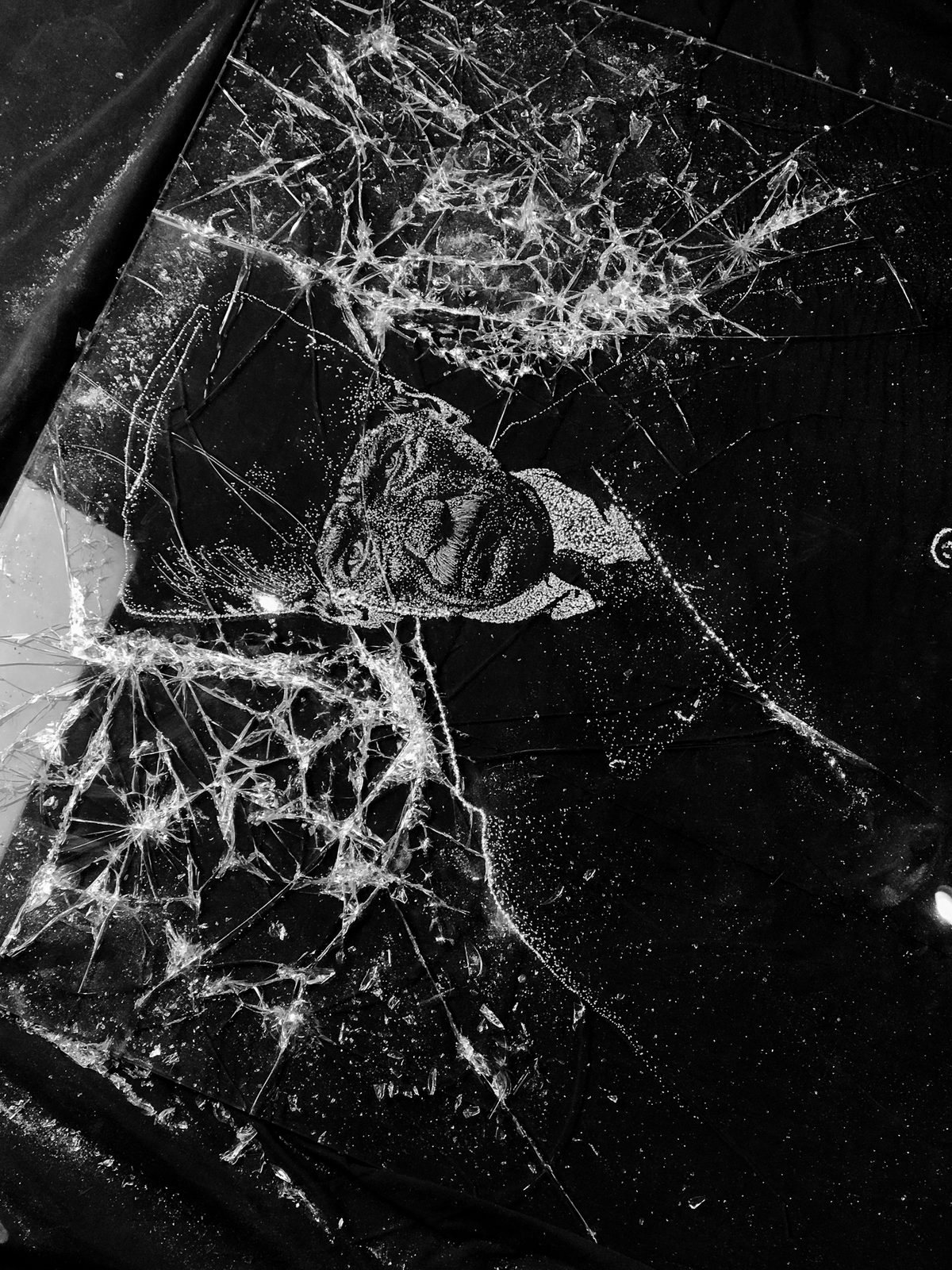
Broken glass art is a contemporary technique, but the hands that strike the glass at Cracasso belong to an artist from Turkey — a country where geometry, glass and light have shaped art for centuries. This article looks at where those traditions meet the fractured portraits of Yasin Uca, and where they clearly part ways.
Geometry before ornament: the Seljuk inheritance
When the Seljuk sultans ruled Anatolia, their builders covered palaces, mosques and madrasas with geometric systems: interlocking stars, polygons and lines that seem to continue beyond the wall. At Kubadabad Palace on Lake Beyşehir, built for Sultan Alaeddin Keykubad in the 1220s and 1230s, the walls were lined with eight-pointed star tiles set into cross-shaped tiles — a pattern that only works because every angle is calculated.
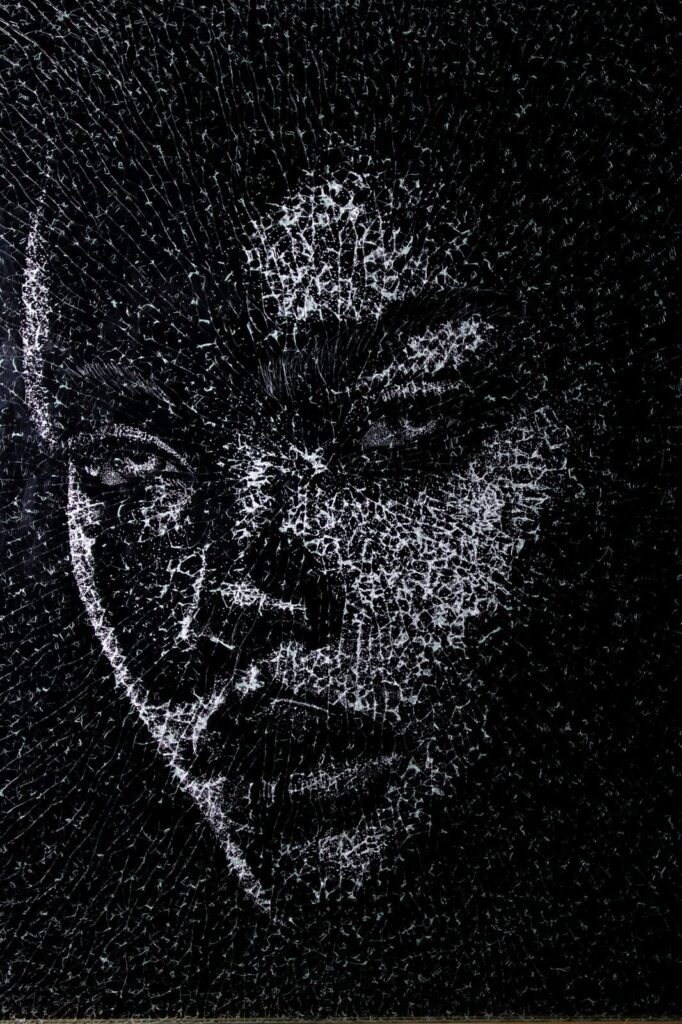
A broken glass portrait is not a star pattern. But it shares one discipline with that tradition: the image is built from lines and intersections, not from colour. Every impact sends straight fracture lines outward from a single point, and where those lines cross, light is caught. In Seljuk geometry, the line is the structure; in broken glass art, the fracture is the structure.
Glass and light in the Anatolian tradition
Glass has a long history in Anatolia. Coloured glass fragments have been found at a palace of Sultan Alaeddin Keykubad, and under the Ottomans Istanbul became a centre of glassmaking, with workshops supplying the coloured glass used in the windows of mosques and palaces. In the 19th century, the glassworks of Beykoz on the Bosphorus became famous, above all for çeşm-i bülbül — “the nightingale’s eye” — glassware with fine spiralling stripes.
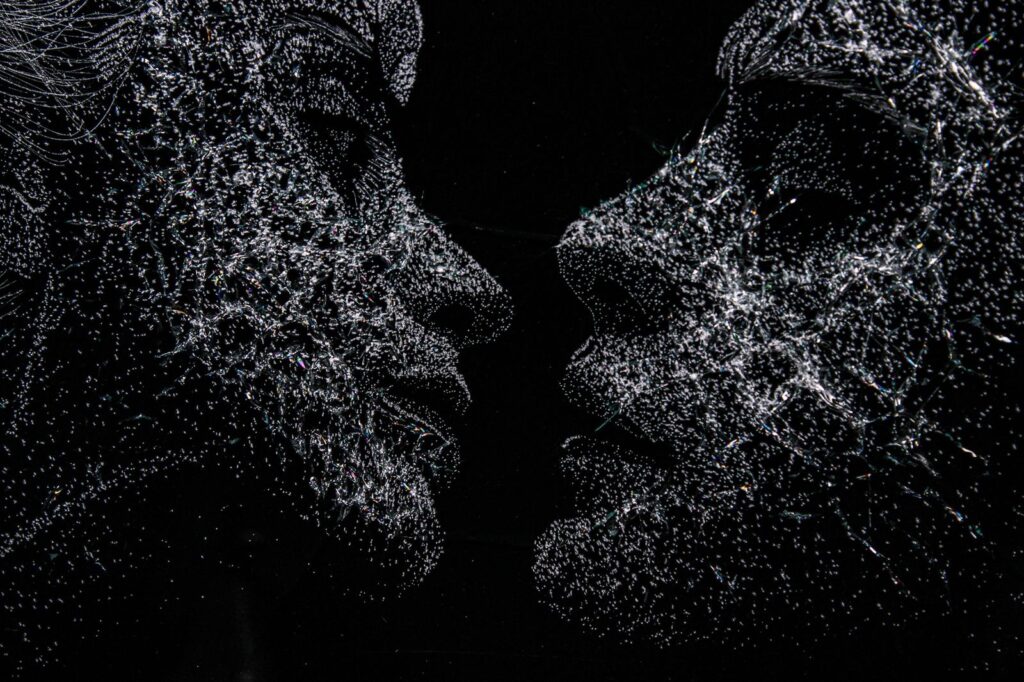
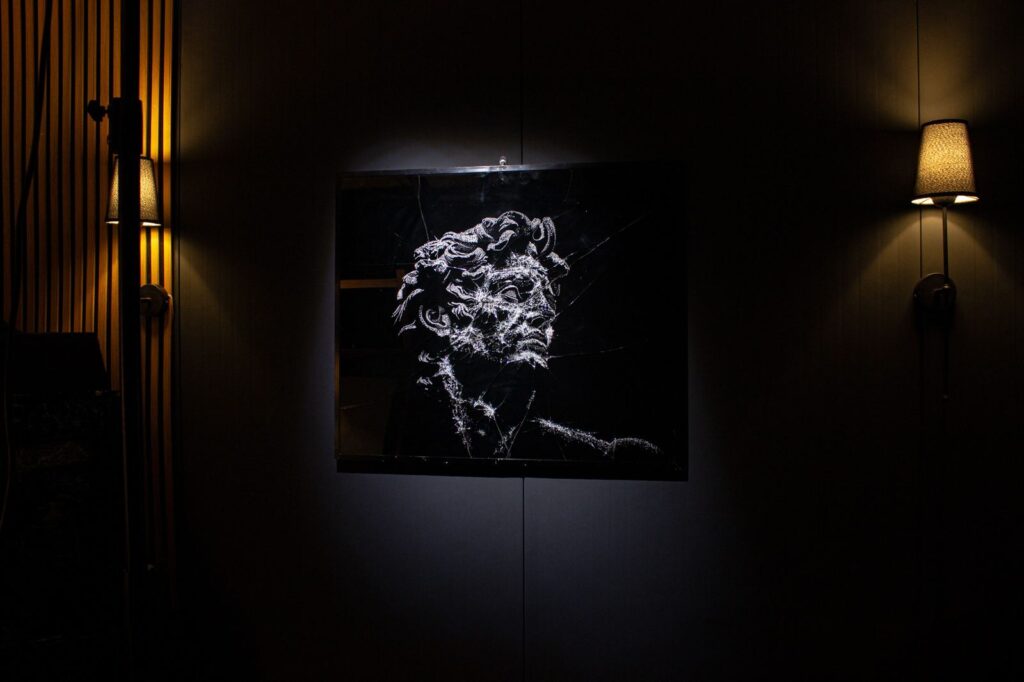
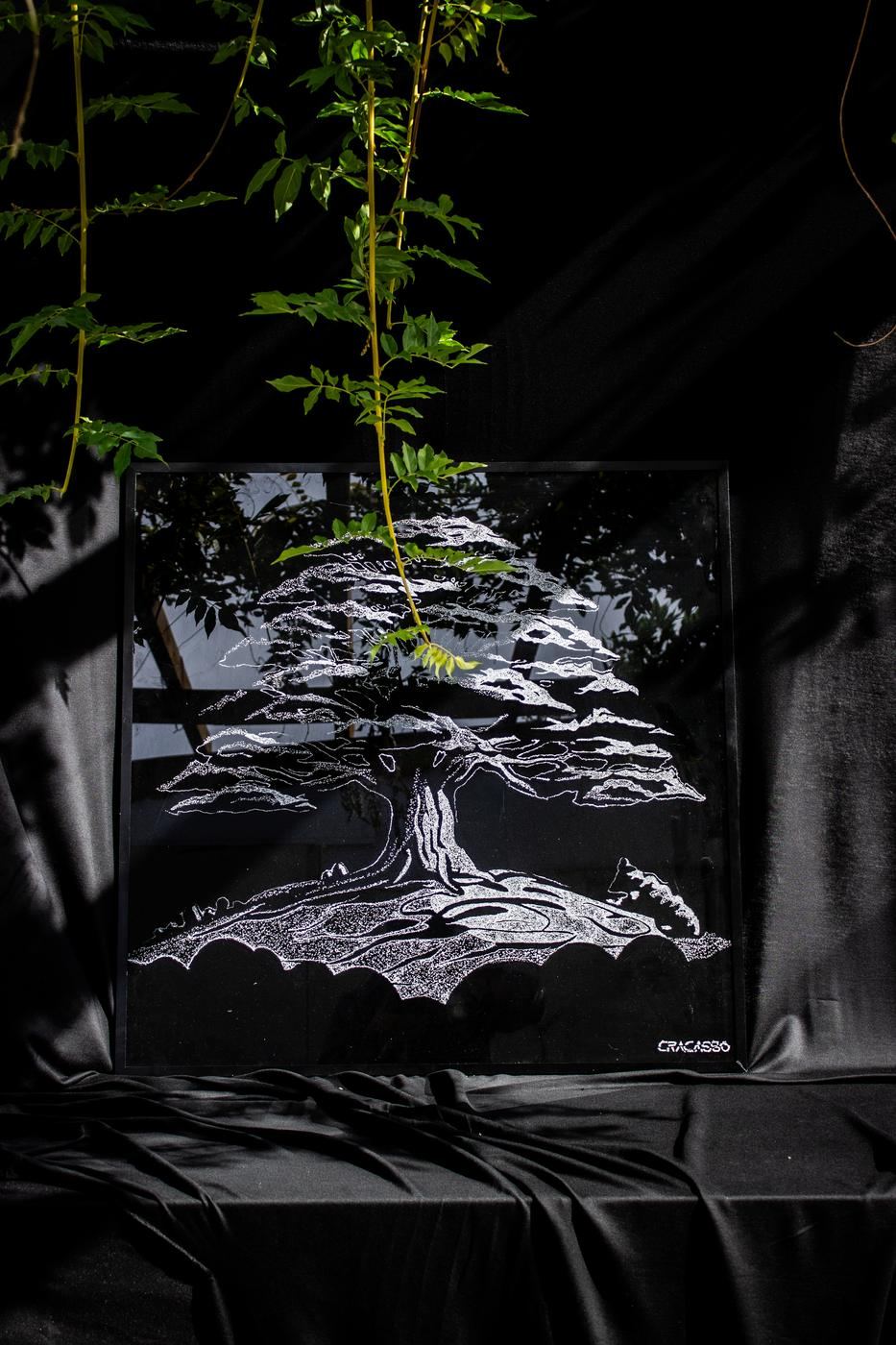
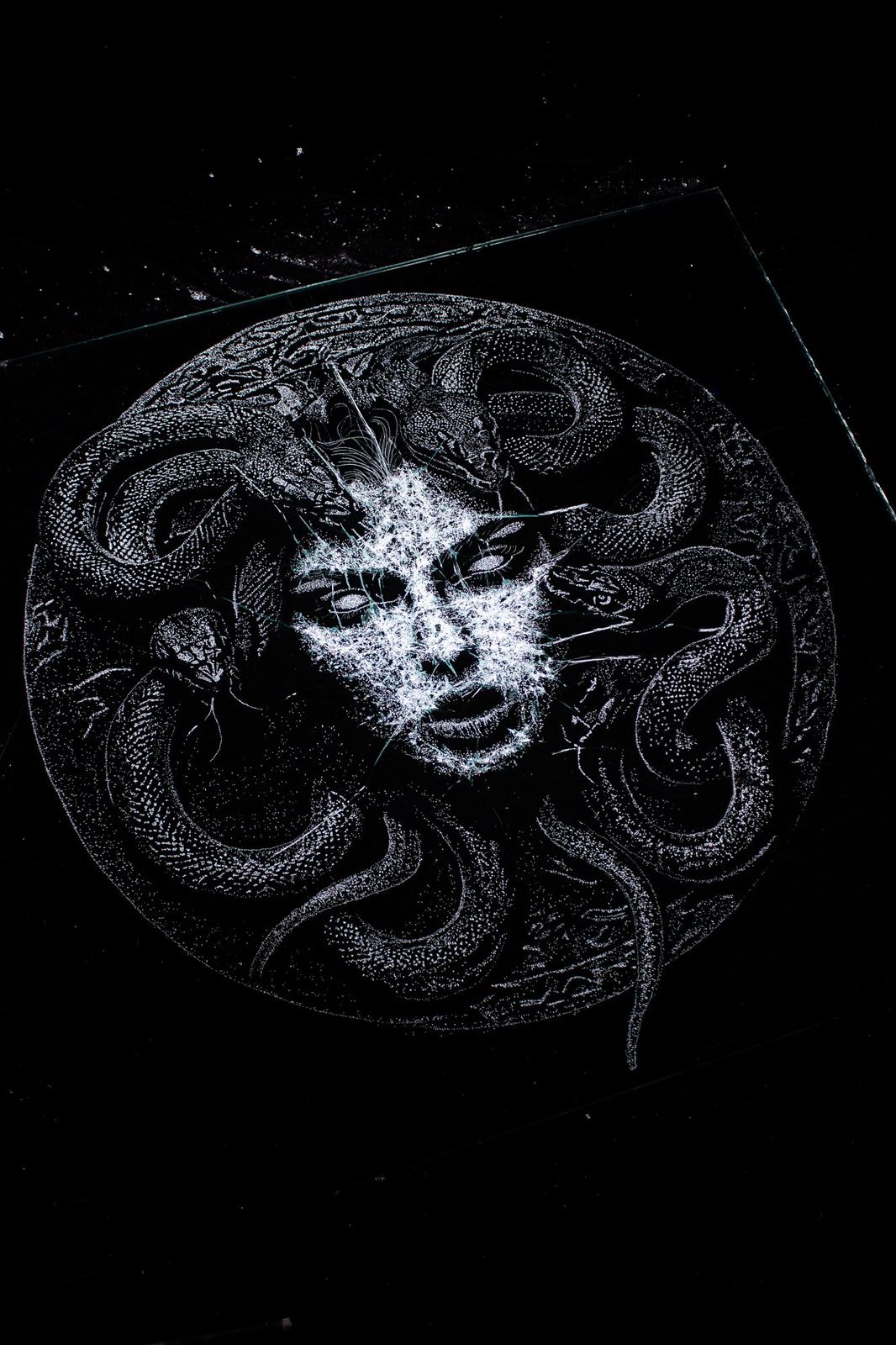
Those traditions treated glass as something light passes through. Broken glass art turns that idea around. The portrait is drawn on laminated safety glass with a black-painted back, so light does not pass through it: it enters the fractures, scatters along their edges and comes back to the viewer. As you move, different fractures light up, which is why a single work can look calm in the morning and electric under a spotlight at night.
Controlled chance: what ebru teaches about fractures
Perhaps the closest relative of broken glass art in Turkish tradition is not a glass craft at all, but ebru, the art of marbling. In ebru, colours float on a thickened water bath and are guided with a stylus and comb before a sheet of paper lifts the pattern. The artist cannot control every vein of colour — but a master knows exactly how the colour will move. UNESCO added Turkish ebru to its list of intangible cultural heritage in 2014.
Striking glass works in a similar way. Yasin cannot dictate the path of every crack. He chooses where to strike, how hard, and in which order; the glass decides the rest. Hundreds of controlled strikes later, a face appears — partly planned, partly the voice of the material. Read more about the process in How broken glass art is made.
Where the paths part
It would be easy to dress broken glass art in Turkish motifs. Cracasso does not. The works are portraits — faces, figures, gods and icons — and their language is contemporary: black glass, white fractures, an aluminium frame. The cultural link lies elsewhere: in the patience of geometric craft, in a feeling for glass and light, and in the acceptance that the material has a say.
The clearest Turkish subject in the studio is the Atatürk portrait, first unveiled to visitors in Kızılcaköy in 2025. Its gaze is drawn in exactly the same way as every other work: strike by strike, with no brush and no second chance.
A Turkish artist in a global medium
Broken glass art is practised by artists in many countries. What a Turkish studio brings to it is not a style to copy but a sensibility: an eye trained by geometric architecture, by glass that has served light for centuries, and by crafts like ebru that turn chance into control.
If you would like to see that sensibility in person, the collection shows the available works, and a custom portrait can carry the same technique into your own story.